

A hotel room works fine for one adult and one night. For five people and more than a night or two, the maths, and the actual day-to-day, look completely different.
Book a hotel room in Inverness for one adult and one night, and the choice barely matters. Book for five people (two adults, three kids, a week of Highland weather to plan around) and it stops being a style preference and starts being a maths problem: how many rooms, how many meals out, how much luggage juggling between two separate spaces that aren't actually connected.
This isn't a "self-catering is always better" pitch. It's what genuinely changes when the party is five people rather than one or two, based on how self-catering holiday homes and hotel bookings are actually structured near Inverness.
What Actually Changes When You Book Self-Catering Instead of a Hotel for Five People?
The core difference is room count and meals: a family of five usually needs two hotel rooms and eats out for every meal, while a self-catering home is one booking with its own kitchen. Everything else, including cost, privacy, and how the evenings actually feel, follows from those two facts.
A hotel room is built around one or two guests. Most standard rooms cap out well below five people, which means a family of five is booking two rooms as a matter of course, not by choice. Two rooms means two key cards, two lots of luggage to manage, and, unless you've paid for adjoining rooms specifically, a wall between the kids and the adults rather than one shared space.
How Many Hotel Rooms Does a Family of Five Actually Need?
Almost always two. A typical hotel double or twin room sleeps two, occasionally three with an extra bed or a cot squeezed in. Five people splits unevenly across that: two adults in one room, three kids in another, or some other awkward division, and every night starts with working out who's sleeping where.
A two-bedroom self-catering home avoids that split entirely. The Main House at Mardon, for example, is one booking for the same five people: two bedrooms (one double, two singles) plus a sofa bed in the living room, and one bathroom. Everyone's under the same roof, in the same booking, with one check-in rather than two.
What Does Having a Kitchen Actually Save You Over a Few Days?
A full kitchen means breakfast and at least some dinners happen at "home" instead of in a restaurant, which is where the real cost difference between self-catering and a hotel actually shows up, not in the nightly rate. Feeding five people three meals a day out, every day, for anything longer than a night or two adds up fast in a way a single nightly hotel rate doesn't show you upfront.
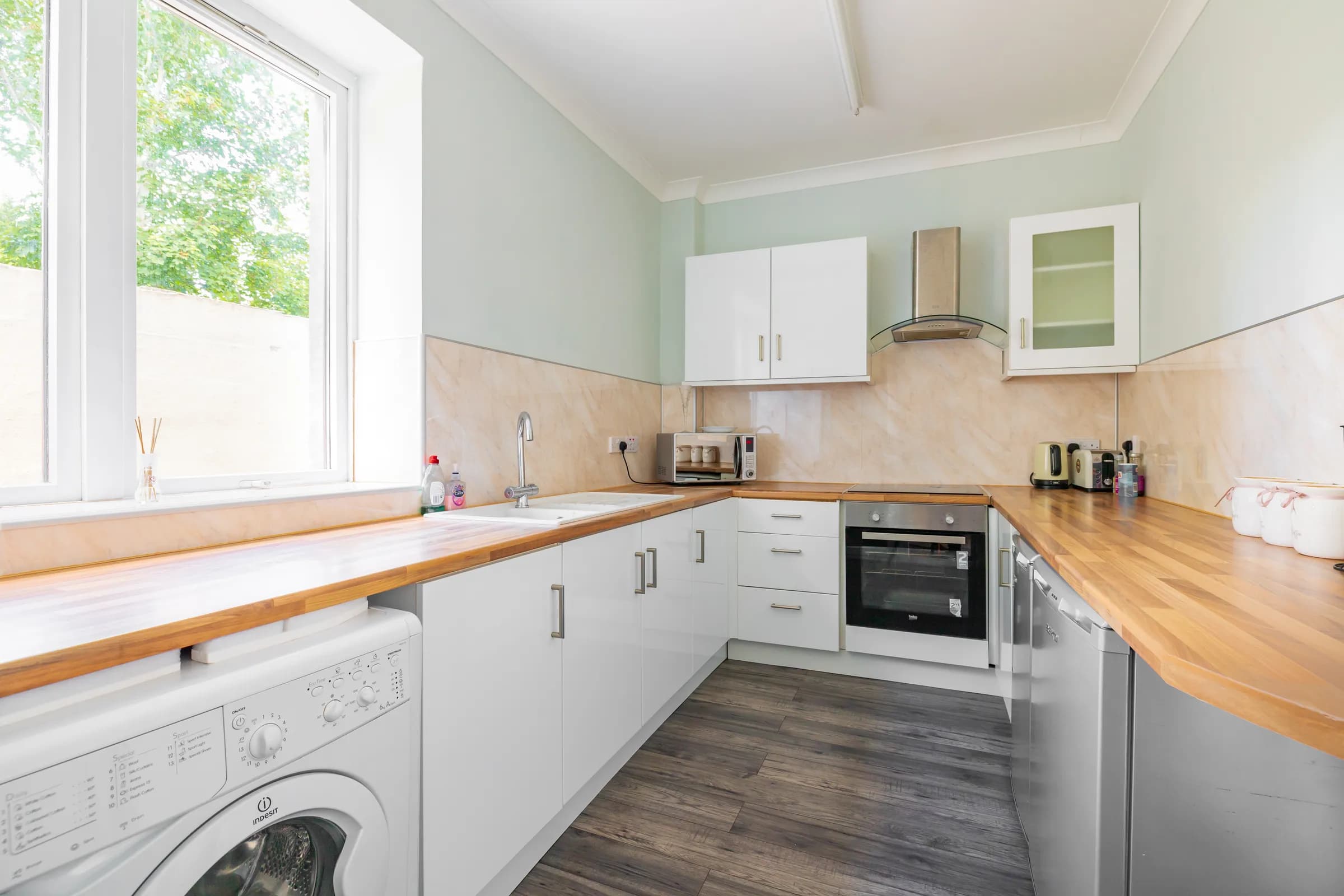
A self-catering kitchen worth the name has the basics covered: a proper oven or hob, a fridge, a kettle and toaster, and somewhere to actually sit down and eat rather than balance plates on a bed. It also means the practical stuff, like washing swimming kit after a day at the beach or doing a load of laundry midweek rather than packing for a week in one bag, is just there rather than a special request.
Self-Catering vs Hotel for a Family of Five: A Straight Comparison
| Hotel | Self-catering holiday home | |
|---|---|---|
| Bookings needed for 5 people | Usually 2 rooms | Usually 1 booking |
| Sleeping space | Split across 2 rooms | Multiple bedrooms under one roof |
| Meals | Restaurant or takeaway for every meal | Full kitchen, cook some or all meals |
| Cleaning | Daily housekeeping included | One professional clean, ideally included in the price |
| Typical minimum stay | Often 1 night | Commonly 2 nights or more |
| Privacy | Shared corridors, staffed reception | Private entrance, self-contained |
When Does a Hotel Still Make More Sense?
For one night, or for one or two adults without kids, a hotel is genuinely hard to beat: you turn up, someone else has cleaned the room that morning, and there's a reception desk if anything goes wrong. The maths only tips toward self-catering once you're feeding more than a couple of people for more than a night or two. If your trip really is a single overnight stop, book the hotel; that's not what a two-bedroom holiday home is for.
What Should You Actually Check Before Booking Self-Catering for a Group?
A few things separate a genuinely well-run self-catering stay from one that just looks cheaper on paper:
- Is the cleaning fee included or added at checkout? Some listings quote a low nightly rate and add a separate cleaning charge once you reach payment, which can close most of the price gap with a hotel.
- Is parking secure and on-site, or a shared or street arrangement you're trusting to luck?
- Is there a genuine kitchen (oven, fridge, dining table), or a kettle and a microwave balanced on a shelf?
- What's the minimum stay? Most self-catering bookings run two nights or more, unlike a hotel's single-night flexibility.
- Is it actually licensed? Scotland has required a short-term let (STL) licence for every self-catering property since October 2023, and a licensed operator has been through a formal safety check that an unlicensed one hasn't.
Mardon Holiday Home, a licensed self-catering property in Milton of Culloden near Inverness, is one local example that covers all of the above. See the full comparison of both its properties if a two-bedroom home for five isn't quite the right size.
Frequently Asked Questions
How many bedrooms does a family of five actually need in a self-catering home?
Usually two: a double for the adults and a twin or two singles for the kids, plus a sofa bed to cover the fifth person without anyone sharing a bed who'd rather not.
Is a self-catering holiday home actually cheaper than a hotel for a family of five?
It depends on how many nights and how often you'd eat out, but the two biggest cost differences are structural: a hotel usually means booking two rooms for five people, and a self-catering kitchen means you're not paying restaurant prices for every meal. For a single night, a hotel is often the simpler and cheaper option; for several nights with a family, self-catering tends to work out better.
Do self-catering properties usually include kitchen equipment and cookware?
A properly equipped one should include a fridge, oven or hob, microwave, kettle, toaster and basic cookware, not just a kettle on a shelf. It's worth checking a listing's kitchen photos before booking rather than assuming.
Is parking usually included with self-catering stays?
It varies by property: some rely on shared street parking, while others offer secure, gated, or even indoor parking on-site. Worth confirming before you book, especially with a full car for five.
What's a typical minimum stay for a self-catering booking?
Commonly two nights or more, since a lot of the value (cooking rather than eating out, one clean instead of daily housekeeping) only shows up once you're staying a few nights.
Is cleaning included in the price, or charged separately?
At a well-run self-catering property it's built into the price you see, not added at checkout. Worth checking explicitly, since some listings quote a lower nightly rate and add a cleaning fee later.
Comparing costs and space is one part of the decision; what guests actually think of a stay is the other. Mardon's reviews page has the honest version, positive and critical alike, for anyone weighing up this specific property.