
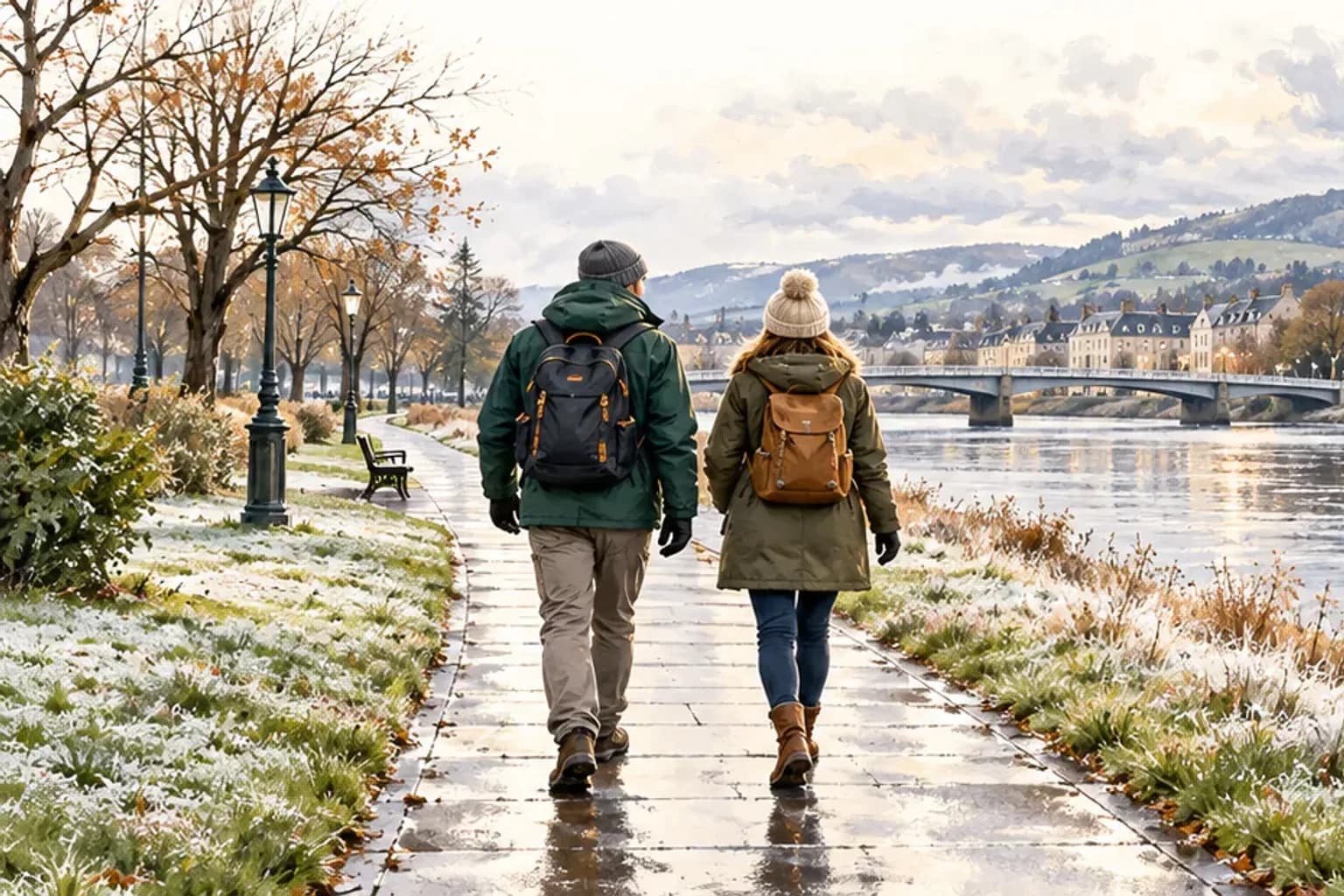
Dated sunrise and sunset times for winter 2026/27, how trunk and council roads are gritted, a layered packing list, a separate car kit and a winter day plan with an indoor fallback.
Breakfast can finish before the sun rises, and a late lunch can run close to sunset. Inverness in winter rewards a slower plan, especially when your trip includes driving beyond the city.
The Met Office's Inverness climate averages record 8.88 days of air frost in January, using the 1991–2020 period. Air frost means the air temperature falls below freezing. That's a useful reason to pack for cold mornings, not a promise of snow on your holiday.
You can enjoy the Highlands without treating every day as a road trip. Knowing the light, checking the whole route and carrying the right layers makes that choice easier.
Weather averages, road-service hours and opening times checked on 7 October 2026.
What is Inverness winter weather actually like?
Inverness winter weather can bring rain, frost, wind and occasional snow, with colder conditions on higher Highland routes. December to February is the winter season. City climate averages help with packing, but they cannot tell you whether a particular road or footpath will be icy.
Expect cold, damp days rather than guaranteed snow
The Met Office's 1991–2020 averages put January's daily maximum at 7.11°C and minimum at 1.30°C. December's figures are 7.30°C and 1.45°C. Those averages hide colder spells, and they aren't a forecast for winter 2026/27.
Rain matters as much as temperature. A wet coat, thin socks and a long wait outdoors can spoil a day that looked mild on a weather app. Pack for staying dry first. Snow photos can wait.
The city forecast doesn't describe the whole Highlands
A trip south towards the Cairngorms or into higher ground needs its own weather check. Snow, visibility and wind can change along your route. Don't use a clear morning in Inverness as permission to follow a mountain road without checking it.
Forecasts should cover your destination and the return journey. Keep an indoor alternative that you would actually enjoy, rather than a last-minute place to shelter.
How much daylight does Inverness get in winter?
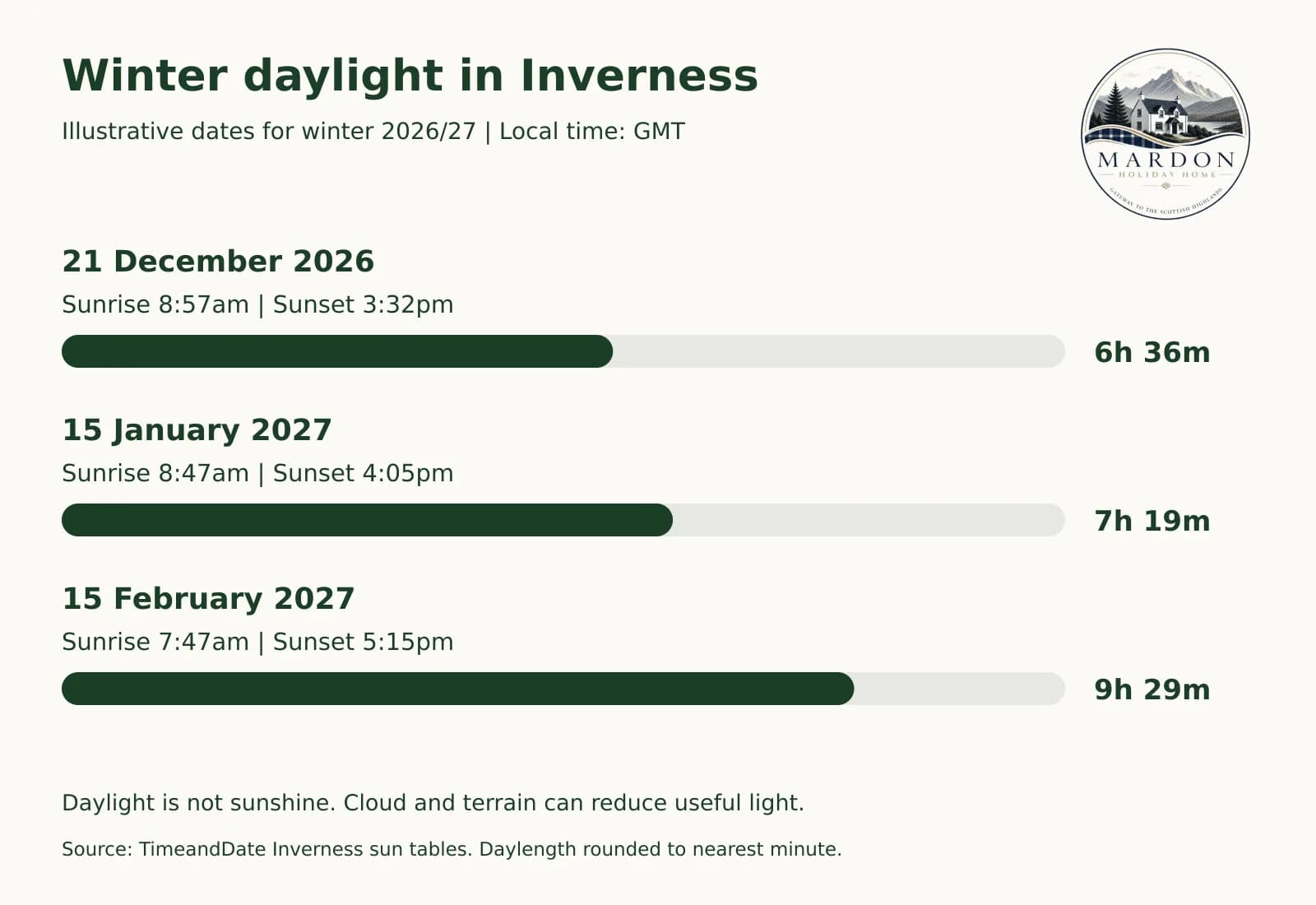
Inverness has about six and a half hours of daylight near the December solstice, with longer days through January and February. Plan outdoor stops between sunrise and sunset, then allow time for travel. Twilight adds light, but it isn't a reliable sightseeing or walking buffer.
Use dates, not a single winter sunset time
These examples use TimeandDate's calculated sunrise and sunset times for Inverness. All times are local GMT. Daylength is rounded separately from the displayed clock times, so a one-minute difference can appear when you subtract them.
| Example date | Sunrise | Sunset | Approximate daylight |
|---|---|---|---|
| 21 December 2026 | 8:57am | 3:32pm | 6 hours 36 minutes |
| 15 January 2027 | 8:47am | 4:05pm | 7 hours 19 minutes |
| 15 February 2027 | 7:47am | 5:15pm | 9 hours 29 minutes |
Cloud, mist, trees and surrounding hills can make a location feel dark before the published sunset. Daylight also isn't the same as sunshine. A grey afternoon still counts towards the daylength above.
Work backwards from your return
Choose one main outdoor stop and set a return time before leaving. If a December outing needs two hours of driving plus a meal, that takes a large share of the available light. Adding another distant stop rarely improves it.
Compare Highland day-trip distances before choosing the route. A short journey leaves room to pause without turning the drive home into a race against sunset.
Are Inverness roads safe to drive in winter?
Inverness roads can be usable in winter, but snow, ice, flooding, wind or fog can make a journey unsafe or close a route. Major roads receive winter maintenance, which does not guarantee clear surfaces. Check live conditions and travel advice before deciding whether to drive.
Trunk roads and local roads have different services
Trunk roads are major routes managed nationally. Transport Scotland operates a dedicated 24-hour winter service from 1 October to 15 May. The A9, A82, A96 and A835 are among the Highland trunk roads, but treatment doesn't make them immune to disruption.
Highland Council's gritting priorities apply to council-maintained roads. Its stated hours are 6am to 9pm, with no overnight service. Minor roads are treated as resources allow, after higher-priority routes.
The final mile matters. A treated main road doesn't tell you whether an accommodation entrance or a quiet side road has ice. Ask about the approach, parking surface and any steep section before arrival.
Check the whole journey before setting off
Use Traffic Scotland's winter travel information for route disruptions, weather advice and links to the trunk-road gritter tracker. Check local-road information separately when your journey leaves that network. A gritter's recent visit isn't a safety certificate.
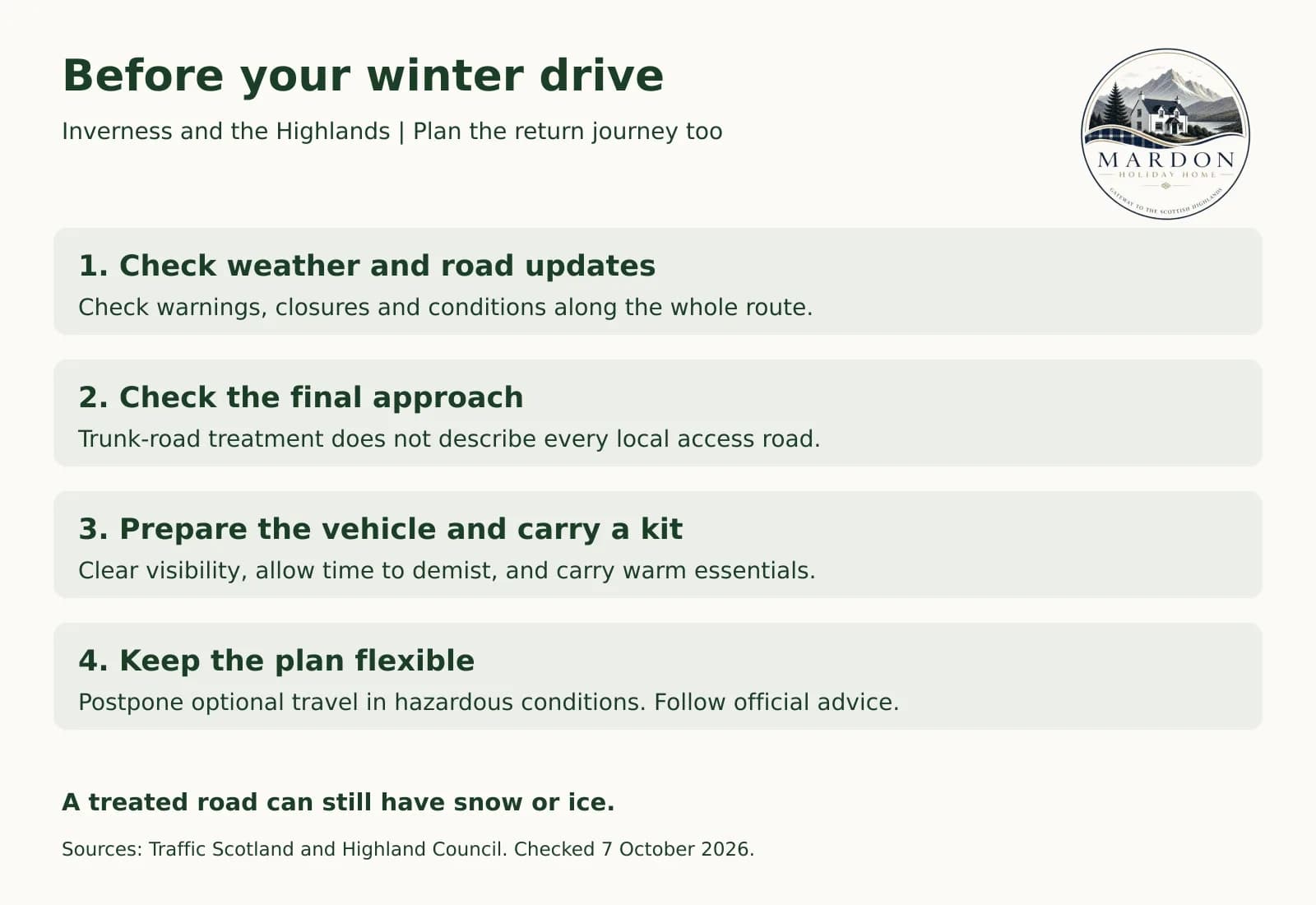
- Check the destination forecast and weather warnings.
- Check closures and disruption along both directions of travel.
- Follow Police Scotland advice and postpone optional journeys in hazardous conditions.
- Clear the vehicle's windows, mirrors and lights, and allow time to demist it.
- Carry your winter kit and leave room for delays or a changed plan.
The Highway Code advises leaving a gap up to ten times greater than normal on icy roads. Smooth driving and a larger gap matter. Hiring a larger vehicle doesn't remove that problem.
When choosing accommodation with free parking in Inverness, check access as well as cost. An easy place to park helps more than a space that needs a difficult approach. At Mardon in Milton of Culloden, for example, the gated driveway sits beside the A96 trunk road, and the Main House includes indoor garage space, which can spare you a frosted windscreen on a cold morning.
What should you pack for Inverness in winter?
Pack a waterproof outer layer, warm removable layers, footwear with grip, a hat and gloves, plus a torch and charging equipment. Add a separate emergency kit if you're driving. Clothes for city sightseeing are not a complete kit for winter walking in the Highland mountains.
Clothes for city walks and short outdoor stops
Three layers are a useful starting point: a base layer next to your skin, a fleece or jumper for warmth, and a waterproof outer shell. Adjust them to the forecast and your activity. Choose boots you've already worn, rather than breaking in a new pair on holiday.
- Hooded waterproof jacket and a warm mid-layer.
- Thermal top for colder days and spare dry socks.
- Waterproof boots with a grippy sole.
- Hat, gloves and a scarf or neck warmer.
- Small daypack, water bottle and a bag for wet items.
- Torch, charged phone and power bank.
Keep the gloves where you can reach them. A carefully packed suitcase doesn't help while you're standing outside a locked car with cold hands.

A separate kit for the car
Carry an ice scraper, de-icer, torch, charger, warm clothes or blankets, water, snacks and sunglasses for low winter sun. Keep essential items accessible rather than buried beneath luggage. Check what a rental car supplies before collecting it.
Treat the boot kit as support for delays, not permission to travel through a closure. If you expect to drive regularly on snow or ice, discuss suitable tyres with the hire company before booking.

Mountain plans need a different level of preparation
Winter mountain walking requires skills and equipment beyond a city visit or summer hill walk. Seek qualified guidance, check mountain weather and avalanche information, and choose an outing that matches your experience. Adding a torch to ordinary trainers doesn't solve the problem.
How should you plan a winter day in Inverness?
Plan one outdoor outing during the brightest hours and keep an indoor option for poor weather. Confirm opening times, transport and food before leaving. A winter day works best when the route can shrink, and when changing plans doesn't leave you stranded or hungry.
A simple city day with an indoor fallback
Start with breakfast and the day's weather check. If paths are clear and conditions suit, take a short riverside walk, then choose an indoor visit and lunch. Skip an icy route rather than feeling obliged to complete it.
The Inverness Castle Experience with children offers an indoor family option. Its current October–March hours are 10am to 6pm, with last admission at 4pm and closure on Christmas Day. Confirm the details for your date.
Eden Court's cinema or theatre can fill a dark afternoon or evening, subject to the programme. Book the performance you want; an open venue doesn't mean every event has seats available.

Keep arrival and meals straightforward
Arrange late-night transport from Inverness Airport before travelling if your flight lands in the evening. Check the current service for your date and keep the accommodation's arrival instructions handy.
Rail travel can reduce the driving burden, but weather can disrupt trains too. Check ScotRail's live journey updates and the return service before leaving.
Choosing between self-catering and a hotel in Inverness changes how you handle a cancelled outing. A kitchen lets you make breakfast or dinner when plans shrink. Confirm heating, access and check-in arrangements wherever you stay.
Editorial illustrations, not photographs of specific Inverness venues or of Mardon.
Frequently Asked Questions
Does it always snow in Inverness in winter?
No, snow in the city isn't guaranteed. Pack for rain, frost and cold, and check higher-ground conditions separately.
What time does it get dark in December?
Sunset is 3:32pm on 21 December 2026 in Inverness. Cloud and local terrain can reduce useful light earlier.
Is the A9 guaranteed to stay open?
No, winter maintenance cannot guarantee an open or ice-free A9. Check live disruption and official travel advice before departure.
Can you visit Inverness without hiring a car?
Yes, a city-focused visit can work without a hire car. Check transport to your accommodation and current services for any day trips.
Are waterproof boots worth packing?
Yes, waterproof boots with grip are useful for wet paths and cold sightseeing stops. Grip still doesn't make an icy path safe.
Do attractions close throughout winter?
No, closures and hours vary by attraction. Check your exact date, especially around Christmas and New Year.
Is February better than December for daylight?
Yes, February offers more daylight. The example dates above show about nine and a half hours in mid-February versus six and a half near the December solstice.
About the author
Bushra
Host, Mardon Holiday Home
Bushra hosts both self-catering units at Mardon in Milton of Culloden and answers every direct enquiry herself. These guides come from questions guests actually ask before booking.