
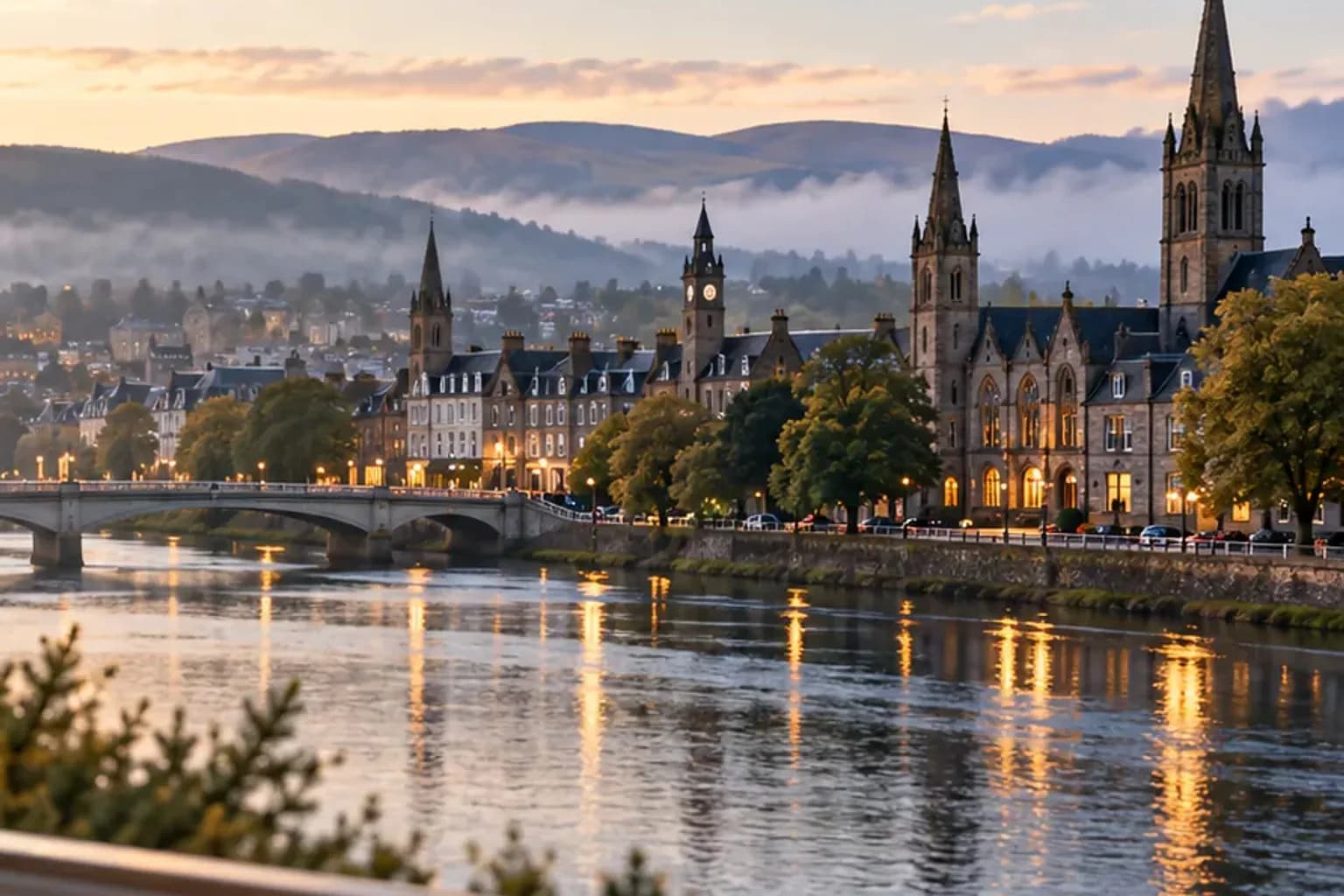
Highland Council is consulting on a £5 per room, per night charge from March to November. Nothing is payable yet and the earliest start is summer 2028. Here's what it could add to an Inverness booking.
A five-night summer stay in Inverness could carry £25 in visitor levy before any VAT, if Highland Council adopts its current proposal. That makes the Highland visitor levy worth understanding now, even though nobody should be charging it yet.
The council says Highland received 9.4 million visitors in 2024, up 82% from 2012, while direct visitor spending reached £2.129 billion. Its draft levy could raise about £9 million a year for tourism services and infrastructure. Those are big figures, but your booking question is simpler: what might appear on the bill, and when? The answer below reflects the live position on 28 September 2026.
Is the Highland Visitor Levy Already in Force in Inverness?
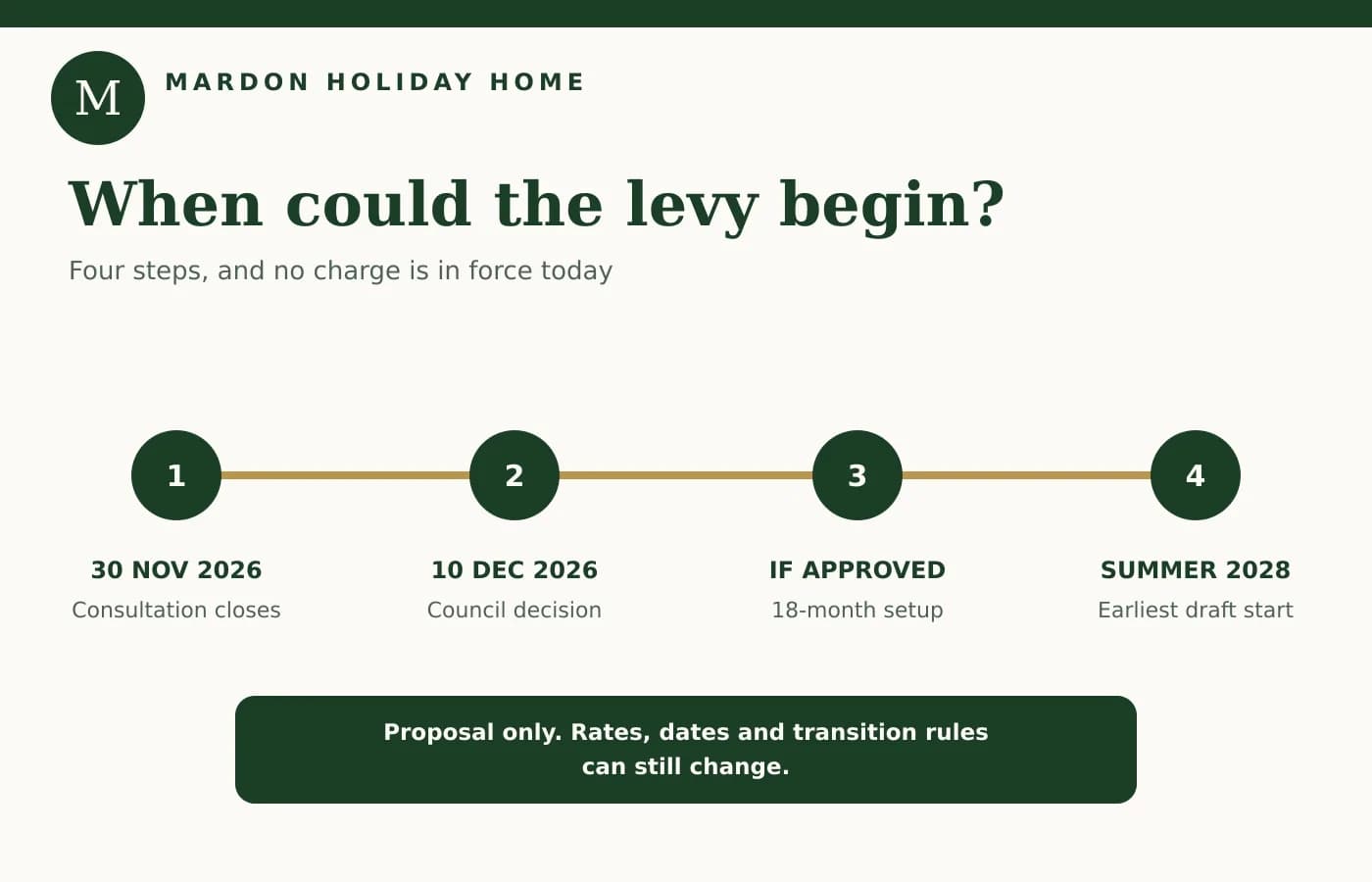
No. Inverness has no Highland visitor levy today. Highland Council is consulting on a tiered fixed charge until 30 November 2026, and councillors plan to decide on 10 December. Approval would start an 18-month implementation period, not immediate collection.
Scotland's 2024 law gave councils the choice to levy overnight stays, and a 2026 amendment added fixed charges. The Scottish Government's visitor levy overview confirms that each council designs its own scheme.
Highland's old 5% idea is no longer the proposal on the table. The live draft uses fixed nightly amounts. Any page that still says Inverness will introduce a 5% tax in 2026 is out of date.
How Much Could Inverness Accommodation Cost Under the Proposal?
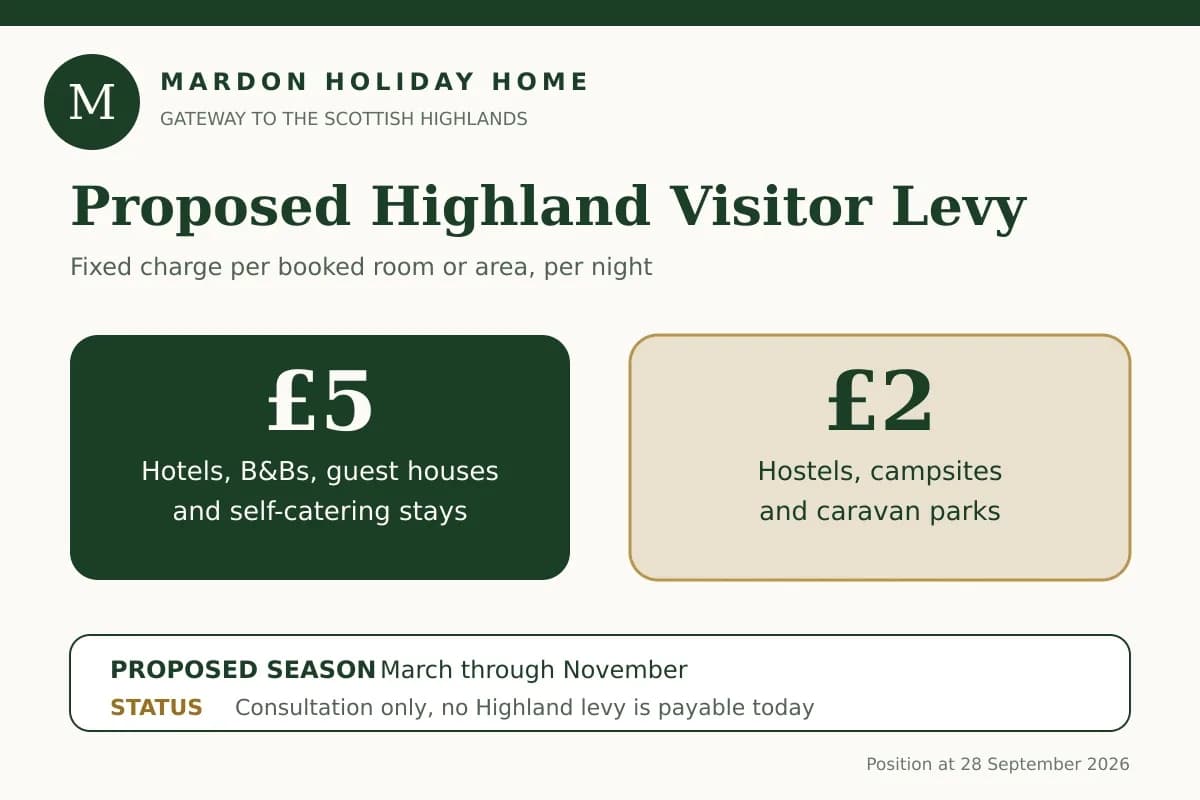
Most hotels, guest houses, B&Bs and self-catering stays would carry £5 per booked room or area for each night from March through November. Hostels, campsites and caravan parks would carry £2. No maximum number of chargeable nights is proposed.
A room or area means the single accommodation unit you buy. One family sharing a self-catering property would not pay £5 per person. Booking two separately sold units could create two charges, subject to the final scheme rules.
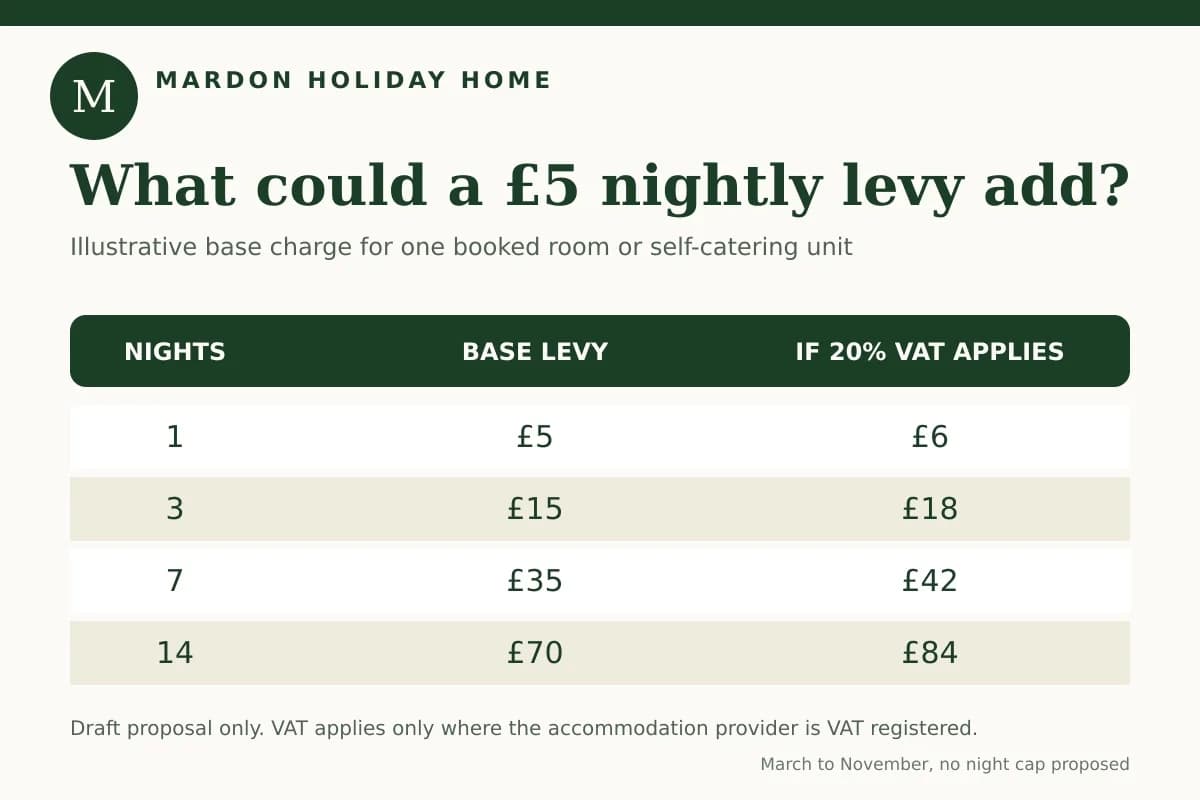
| Nights | Draft £5 levy | If 20% VAT applies | December to February |
|---|---|---|---|
| 1 | £5 | £6 | £0 |
| 3 | £15 | £18 | £0 |
| 7 | £35 | £42 | £0 |
| 14 | £70 | £84 | £0 |
Highland Council's draft says VAT is expected to apply to the levy when a provider is VAT registered. A £5 base charge could therefore add £6 to the guest's bill. Non-VAT-registered providers would not add that VAT. The final guidance still matters.
A fixed fee bites harder at the budget end. A seven-night stay costing £700 would face the same base £35 levy as one costing £2,100.
Which Inverness Stays Would the Highland Visitor Levy Cover?
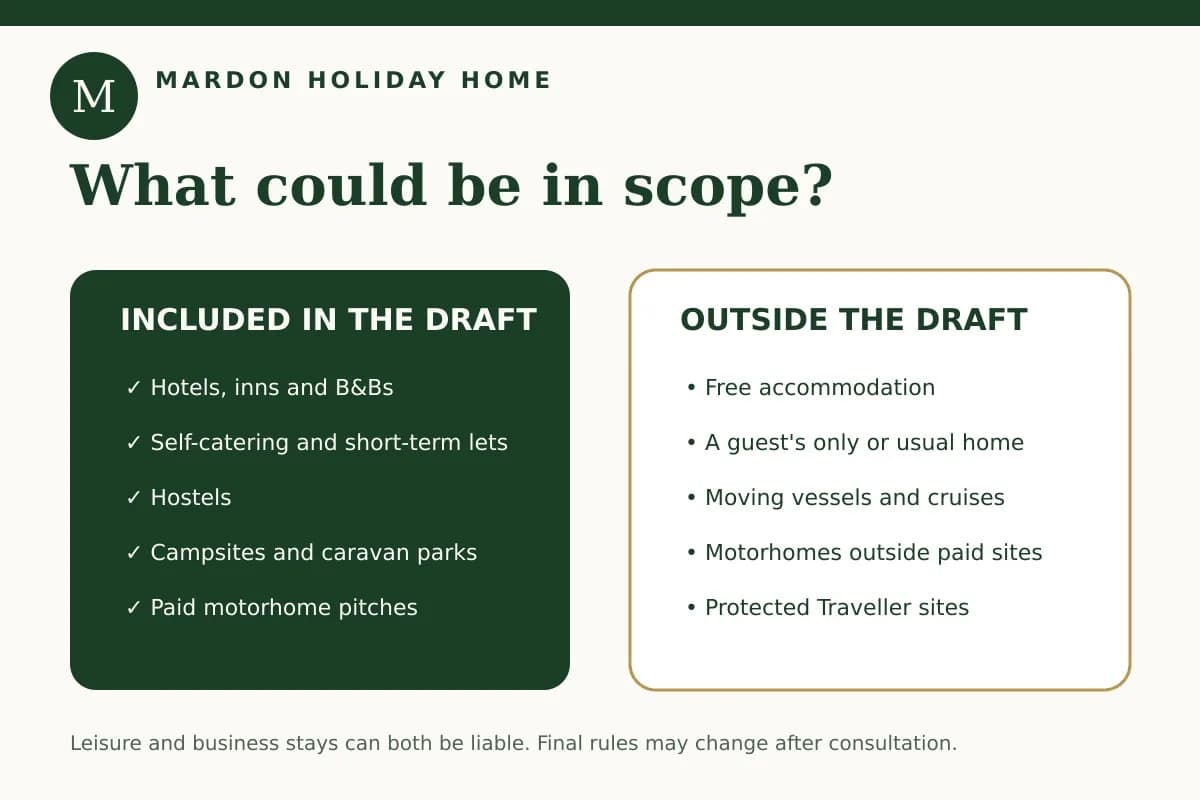
The draft covers paid overnight accommodation across the whole Highland Council area, including Inverness. Hotels, B&Bs, guest houses, short-term lets, self-catering properties, hostels and paid pitches are included. Leisure, business and local residents' stays can all be liable.
The proposal reaches beyond holidays. Contractor, corporate and workforce bookings would be in scope because the test is whether the accommodation is the guest's only or usual home. Anyone comparing long-stay accommodation in Inverness should notice that the draft has no cap on chargeable nights.
Included accommodation would cover:
- hotels, inns, guest houses and B&Bs;
- self-catering homes, short-term lets, cabins and pods;
- hostels;
- caravan parks, campsites and paid motorhome pitches; and
- stationary accommodation in a vehicle or vessel.
Free accommodation, moving vessels, motorhomes outside commercial sites, and protected Gypsy and Traveller sites fall outside the scheme.
Choosing self-catering rather than a hotel in Inverness may still suit a family or group. A per-unit fixed charge does not grow with the number of guests, which makes occupancy more relevant than the nightly headline rate.
When Could the Highland Visitor Levy Start?
Summer 2028 is the earliest date in Highland Council's draft. Consultation closes on 30 November 2026, councillors are due to decide on 10 December, and approval would trigger at least 18 months of preparation before any charge could begin.
"Proposed" and "payable" are not the same thing:
- The statutory consultation runs from 7 September to 30 November 2026.
- Highland Council considers the feedback and a final scheme on 10 December 2026.
- A yes vote starts the legal 18-month implementation period.
- The current draft targets summer 2028 for launch.
Rates, dates, exemptions and booking rules may change before step two. Highland Council's live consultation page is the sensible source to watch.
Forward bookings need careful wording. The final scheme must explain how deposits and bookings made before launch are treated. Until then, don't assume booking early guarantees exemption. Booking self-catering in Inverness well ahead still helps with choice, but the stay date and final transition rules may decide liability.
Who Could Claim an Exemption or Reimbursement?
National rules protect people without a usual home and specified benefit recipients. Highland's draft also includes carers on named benefits. Most eligible guests would pay first and claim reimbursement, while Highland residents and NHS patients do not receive a blanket exemption.
Excluded groups include people who are homeless, refugees, asylum seekers and people whose homes are unsafe or unfit. Refund eligibility includes named disability payments, Attendance Allowance, Personal Independence Payment and specified Scottish disability benefits. The draft adds Carer's Allowance and the carer element of Universal Credit.
Highland residents staying elsewhere in the council area would generally pay. Patients travelling for treatment would not get a direct guest exemption under the draft. The council instead proposes funding NHS Highland patient travel support. Final evidence and claim steps have not been published.
Where Would the Visitor Levy Money Go?
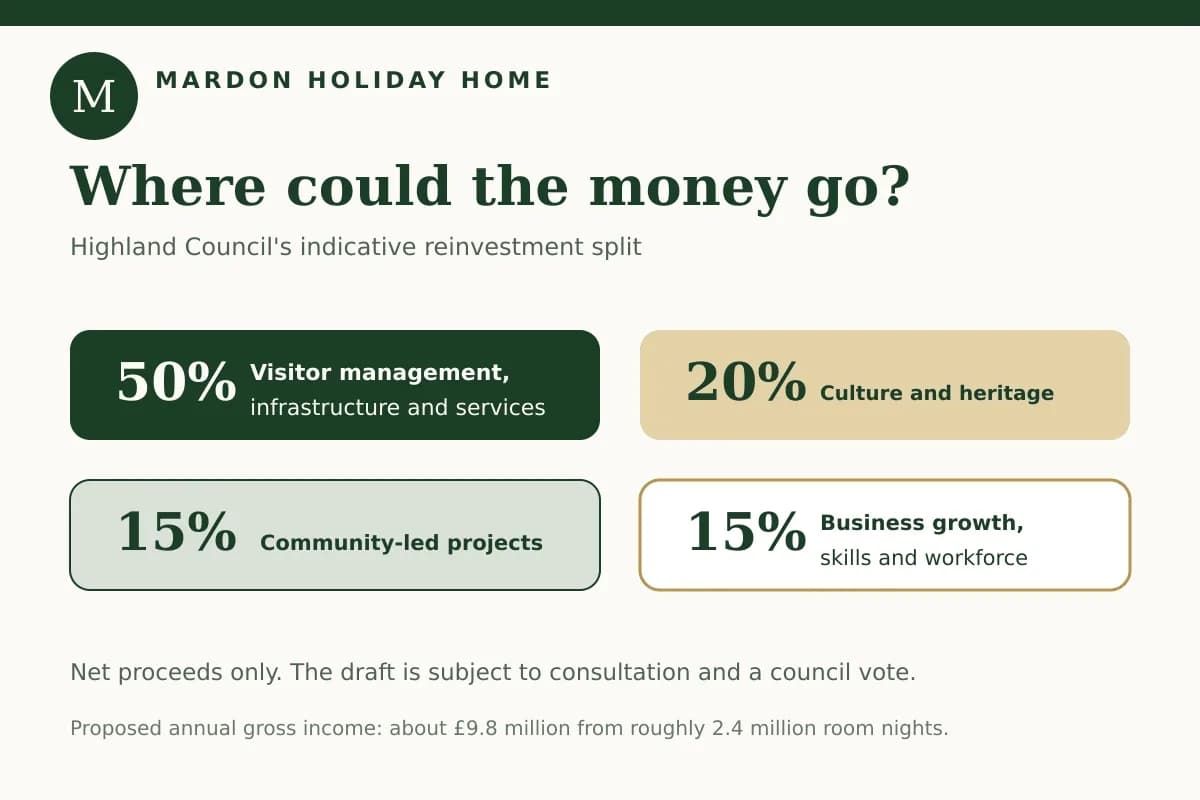
Law requires net proceeds to support facilities or services substantially used by leisure or business visitors. Highland proposes 50% for visitor management and infrastructure, 20% for culture and heritage, 15% for community projects, and 15% for business growth and skills.
The council's consultation papers estimate about £9.8 million in gross annual income from roughly 2.4 million room nights. Public-facing material rounds that to about £9 million. Administration is currently estimated near £550,000 a year, and providers could retain 5% of what they collect.
Suggested spending includes paths, toilets, parking, visitor services, events, heritage and workforce training. A Visitor Levy Forum would advise on priorities, while Highland Council would keep the final spending decision.
How Should You Budget for an Inverness Stay?
Budget on the current room rate for now, then keep a small levy allowance for stays from summer 2028. Check whether the quote includes every mandatory charge, whether VAT changes the levy total, and how many separately bookable units your party needs.
Use a simple five-step check:
- Confirm the stay dates and whether they fall from March through November.
- Count booked rooms or accommodation units, not guests.
- Multiply units by nights and by the proposed £5 or £2 base rate.
- Ask whether the provider is VAT registered and how the charge will appear.
- Recheck the final Highland scheme before paying a non-refundable balance.
Winter travellers may have an easy saving. The draft excludes December, January and February, and the cheapest months to stay in Inverness often reward flexible dates anyway.
Groups should compare the Main House and Annex by total trip cost, space and privacy. The levy proposal is fixed per booked unit, so squeezing everyone into the wrong layout to save £5 is usually false economy.
What Else Should Visitors Know About the Highland Visitor Levy?
Treat every current figure as a proposal until Highland Council votes. The likely guest impact is a clear nightly addition, not a hidden percentage, but the final rate, launch date, transition rules and reimbursement process can still change after consultation.
Frequently Asked Questions
Is the Highland visitor levy a tourist tax?
Yes, it is commonly called a tourist tax, but the legal name is visitor levy. It can apply to business travellers and Highland residents too, so "tourist" is slightly misleading.
Will Inverness hotels charge 5%?
No current Highland proposal uses 5%. The live draft proposes £5 per room or area per night for most accommodation and £2 for campsites, caravan parks and hostels.
Would children pay the Highland visitor levy?
The draft charge is per room or booked area, not per person. A child's presence would not increase the charge when the family shares one unit.
Does the proposal cap the number of nights?
No. Highland Council's current draft applies the levy for the full stay during chargeable months, with no maximum number of nights.
Would Mardon Holiday Home have to charge it?
Mardon is self-catering accommodation within the Highland Council area, so a final scheme matching the draft would bring a booked unit into scope. Nothing is payable today.
Can I avoid the levy by booking before it starts?
Not necessarily. Highland Council must publish transition rules for advance bookings and deposits during implementation, so the booking date alone does not yet settle liability.
Is the levy charged in winter?
Not under the current draft. The proposed charging season runs from March through November, leaving December, January and February outside the levy.
About the author
Bushra
Host, Mardon Holiday Home
Bushra hosts both self-catering units at Mardon in Milton of Culloden and answers every direct enquiry herself. These guides come from questions guests actually ask before booking.